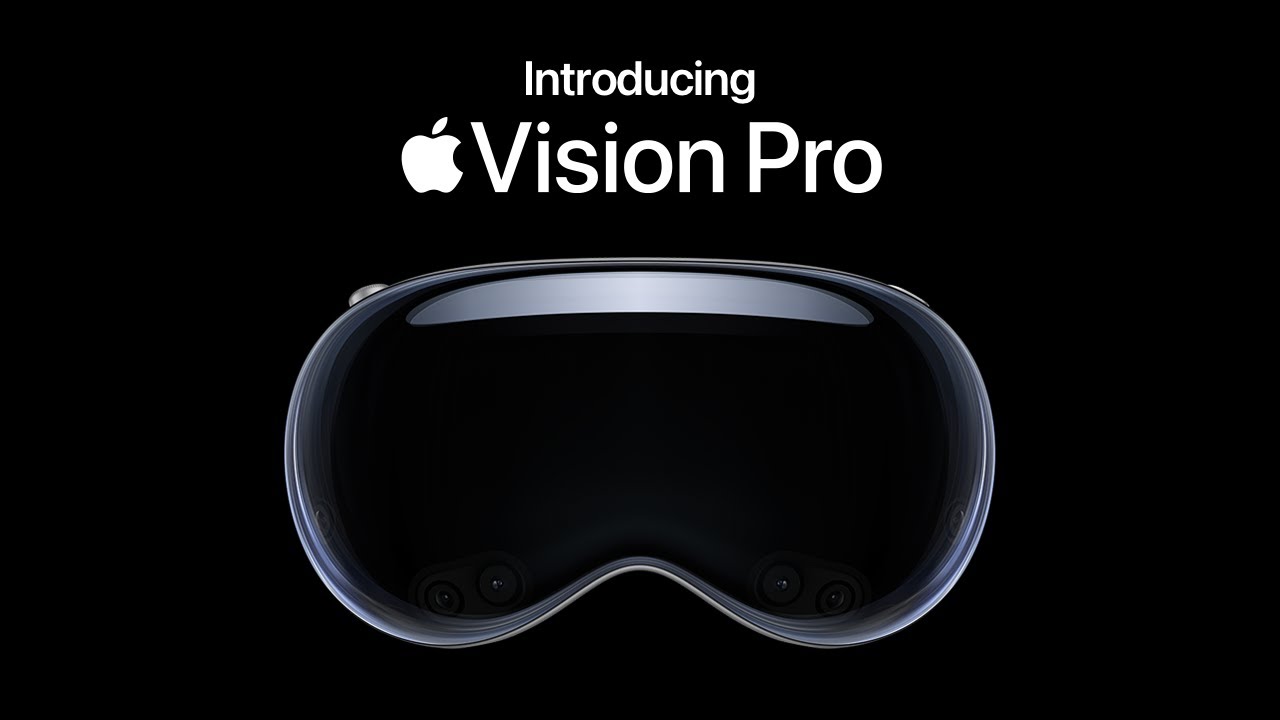
Apple, the standard bearer for technological elegance, has thrust itself into a new venture – spatial computing.
Correct, not the Metaverse. And correct, I still want it!
In a surprising turn of events, the tech giant recently unveiled the Vision Pro, a spatial computer that shrewdly sidesteps the frenzied metaverse buzz and charts a course uniquely its own. Notably, Apple shunned the ‘metaverse’ terminology altogether, emphasising ‘spatial computing’ instead in their product announcement.
Apple’s Vision Pro isn’t a glorified virtual reality headset. Nor is it a trumpeted savior of the metaverse. It’s a first-rate, walkable, wearable, spatial Mac computer, adroitly priced at $3500. Interestingly, the product isn’t tailored to satisfy the web’s insatiable appetite, nor does it cater to the blockchain or cryptocurrency enthusiasts. Apple has opted to run apps through their proprietary iCloud, skilfully focusing on functionality rather than games and virtual reality.

Apple’s approach to the Vision Pro is a masterful game of illusion, an impressive feat in artful dodging. They have managed to ‘solve’ augmented reality by acknowledging that true AR is still a decade or so away. This innovative spatial computer simulates AR through judicious use of virtual reality and mixed reality, offering a taste of what’s yet to come.
When we dissect Apple’s product announcement and the ensuing strategy, a vivid picture begins to emerge. The Vision Pro, in essence, mirrors the price of a Hololens 2 or a mid-range MacBook Pro. It may seem reasonable to surmise that the average consumer, given a choice, would likely choose a 2024 Vision Pro over a 2019 Hololens 2, but might lean toward a mid-range MacBook Pro over the Vision Pro.
With such a lofty price tag, the Vision Pro is not primed for mass-market adoption. It’s a gadget designed for a Mac developer or Apple super-fan who already owns a Mac and is contemplating buying a second one.

Apple’s marketing strategy for the Vision Pro isn’t based on selling the device as an independent unit. Instead, it is presenting the Vision Pro as a part of an interconnected ecosystem that includes other Apple products such as the Mac, iPhone, iPad, Apple Watch, iCloud, AppleTV, and Apple Arcade.
This product launch doesn’t compare to the historical iPhone moment, and it isn’t intended to. The Vision Pro isn’t vying for immediate success or fearing an impending failure. It signifies Apple’s foray into a new computing sector that is likely to experience steady growth over the coming decades, akin to the Mac’s journey. Given the device’s price point, it isn’t aiming for an explosive growth trajectory.
Apple could, of course, eventually launch a non-Pro version of the Vision to lower the price, but that is a strategy to be unfolded over the next 5 to 10 years. The integration of True AR would likely increase the price again. Sales expectations for the Vision Pro need to be realistic. It is reasonable to expect a sales potential of 1-3 million units per year for this device, indefinitely. This is based on the recognition that Macs are currently more functional than the Vision Pro and also that wearing a VR headset for hours on end is simply not as comfortable as using a MacBook Pro.
Remarkable AI at play – Apple is leveraging the power of GANs to craft an avatar that replicates your every gesture, mirrors your facial expressions, and mimics your eye movements.
Apple’s Vision Pro is more than just a VR headset. It represents an uncompromising commitment to form and function, setting the stage for the development of spatial computers priced like traditional computers. Apple is not trying to replace your primary computer; instead, it’s offering you a different kind of computer experience – a spatial, Apple PC, if you will… and I repeat, I want it!